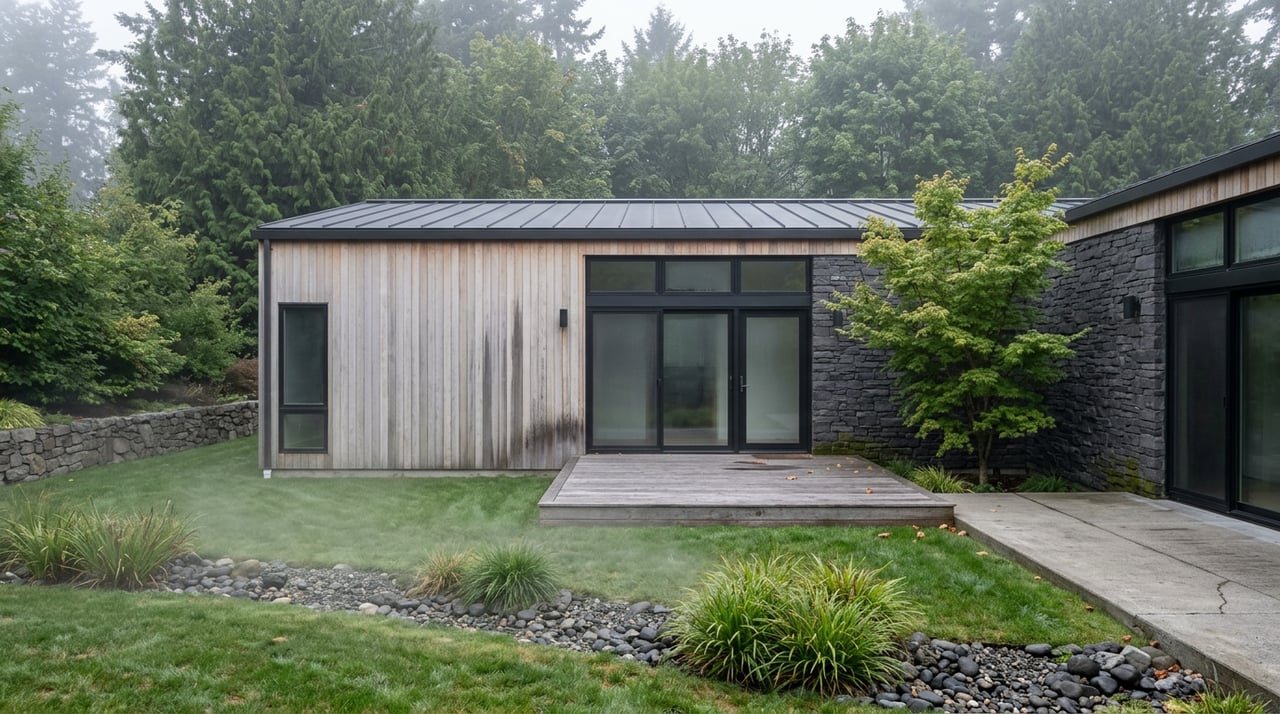
"It is such an important resource, we really don't have any other nature centers like this in the area."
That's Leticia Sosa, who grew up in Shelton and has spent the past three years with the Hood Canal Salmon Enhancement Group, talking about the Theler Wetlands Nature Center on the day it reopened, as reported by Mason County. She said it standing in a building that had been locked to the public for twelve years.
For more than ten years, the Theler Wetlands trail system hasn't been a loop at all. A section of the old levee along the Union River estuary washed out under repeated high tides, and the fix wasn't simple enough to happen quickly. So the north and south halves of the trail got cut off from each other, and anyone who wanted to connect them had to walk along the shoulder of Roessel Road. The route was still commonly called a loop, although the north and south sections were disconnected.
That's finally changing this year, in two separate pieces, and knowing the difference between them tells you what's actually ready to visit right now and what's still coming.
What reopened on July 30
The Theler Wetlands Nature Center held its ribbon cutting at 3 p.m. on July 30, hosted jointly by the Washington Department of Fish and Wildlife and the Hood Canal Salmon Enhancement Group. WDFW Wildlife Area Manager Katie Laushman spoke alongside HCSEG Executive Director Mendy Harlow, and both credited the volunteers who spent the past few years repainting the building, replacing the carpet, and repairing the windows so the space could open again after sitting shuttered since the mid-2010s.
The center now runs on a specific schedule: 9 a.m. to 1 p.m. on Wednesdays, Fridays, and Saturdays, staffed by HCSEG's AmeriCorps volunteers. That's a narrower window than the trails themselves, which are open every day during daylight hours. If you're planning a visit specifically to get inside the building and see the exhibits, those three mornings a week are the ones that matter. Show up on a Tuesday afternoon and you'll find the trails but not the doors.
The building itself dates back to 1995, funded through a Washington State Legislature grant and built after Evergreen State College students spent a year cataloging the wetland's plant and animal life in the early 1990s. It ran as a thriving field-trip destination for years, at one point staffed by a full team of ten AmeriCorps members, before funding structures shifted in 2014 and the North Mason School District had to look for new management. WDFW and HCSEG finalized that transfer in 2023, and construction on the restoration project broke ground two years later, in the summer of 2025.
Why the loop was never whole
The reason the trail split in the first place is worth knowing, because it's not a maintenance story. It's a habitat story. The Union River estuary is nursery water for Hood Canal summer chum, a run that's federally listed as threatened under the Endangered Species Act. Juvenile chum need shallow, low-salinity water to grow before they head out into the canal, and the old levee was working against that by keeping tidal water out of areas where it needed to flow. WDFW and HCSEG's fix wasn't to patch the levee. It was to remove twelve hundred feet of it, dig a new meandering tidal channel, and let the estuary behave the way it did before anyone built a dike through it.
That decision is why the trail has been broken for so long. You can't rebuild a levee-top trail once you've decided the levee shouldn't be there. The only way to reconnect the north and south sections was to build something new above the restored marsh, which meant an elevated boardwalk had to go in before the loop could exist again as an actual loop.
That boardwalk, roughly twelve hundred feet of it, is the piece still under construction. It's designed to sit on pilings above the footprint of the old levee, which means wildlife can pass underneath it instead of being blocked the way the levee blocked them. Once it's finished, people walking the trail won't have to detour onto Roessel Road to get from one half of Theler to the other. The project is being funded through a mix of the U.S. Fish and Wildlife Service, the Washington State Recreation and Conservation Office, NOAA, and the Puget Sound Partnership, and the total cost across restoration and boardwalk construction runs close to three million dollars. That's not a small trail repair. It's a multi-year estuary project that happens to also fix a trail.
As of this writing, the boardwalk hasn't been confirmed complete. WDFW's own materials describe the work as targeted for summer 2026, and status updates get posted at the Salmon Center's site as construction progresses. If you walk out there this month and find sections still fenced off, that's expected. Plan a shorter visit rather than the full 3.2 miles until the loop is confirmed whole.
What this actually changes for a Belfair weekend
None of this means Theler was closed. The wetlands themselves, all 139 acres of protected salt marsh and estuary at the head of Hood Canal, have stayed open through the entire restoration. What's changed is that the Nature Center has reopened, while the trail connection is still in progress. Once the trail connection is complete, Theler will be better connected, with the reopened Nature Center adding to the experience.
If you're building a Saturday around it, here's how the pieces line up right now.
- Morning: Walk the open sections of Theler while the tide is working. The trail reads completely differently at high tide versus low, since the mudflats and channels either fill or empty depending on when you show up. If it's a Wednesday, Friday, or Saturday, time it before 1 p.m. so you can also get into the Nature Center.
- Midday: The Belfair Saturday Market runs every Saturday through September 26 on the grounds of Belfair Elementary School, from 10 a.m. to 3 p.m. It's a short drive from the Theler trailhead and the closest thing Belfair has to a weekly produce and flower market, with local vendors selling farm eggs, seasonal flowers, and handcrafted goods alongside the harvest.
- Afternoon: Mosquito Fleet Winery, a small family-owned operation on NE Old Belfair Highway that's been making wine since 2009, opens its tasting room Saturdays from noon to 7 p.m. They lean heavily into reds sourced from Washington's better-known growing regions, Horse Heaven Hills and Red Mountain among them, and they've built a following around bottlings like the Navigator and the R34 Cabernet.
- Evening: Belfair's dinner options are compact but varied enough that a rotation makes sense. Lotus Garden covers Chinese, pho, and udon. Haru Sushi Teriyaki Wok handles the sushi and teriyaki crowd. Casey's Bar and Grille and The Boat House on North Bay both show up consistently in local recommendations for a sit-down meal to close out the day.
That's a full Saturday without leaving a few square miles of town, and it's a Saturday that wasn't fully available a year ago, since the Nature Center doors were still locked and nobody knew when the loop would reconnect.
The thing worth remembering
Belfair doesn't get a lot of headline infrastructure news. A trail reconnecting and a building reopening after twelve years qualifies as the biggest thing to happen to daily life here in a while, and checking the construction updates can help you follow the work. The practical takeaway is simple: don't assume you've already done Theler. Go check the current trail status, catch the Nature Center on one of its three open mornings, and treat this as the year the wetlands began moving toward what they were supposed to be.
Following local projects like this one, the ones that quietly reshape what a neighborhood offers day to day, is part of how Sound to Summit Property Group stays close to the Kitsap Peninsula and Gig Harbor markets. If you're curious about what else is changing around Belfair, or you'd like to talk through what living near a place like Theler actually looks like, schedule a consultation and we'll walk through it together.